 Bcf Products
The first frost has arrived, the roads are being gritted and the load compartment smells of wet cardboard boxes. For most haulage companies, winter comes as no surprise, but load securing rarely receives extra attention during this period. Yet it is precisely the cold, damp and road salt that cause the materials and the load to react differently than they do in summer.
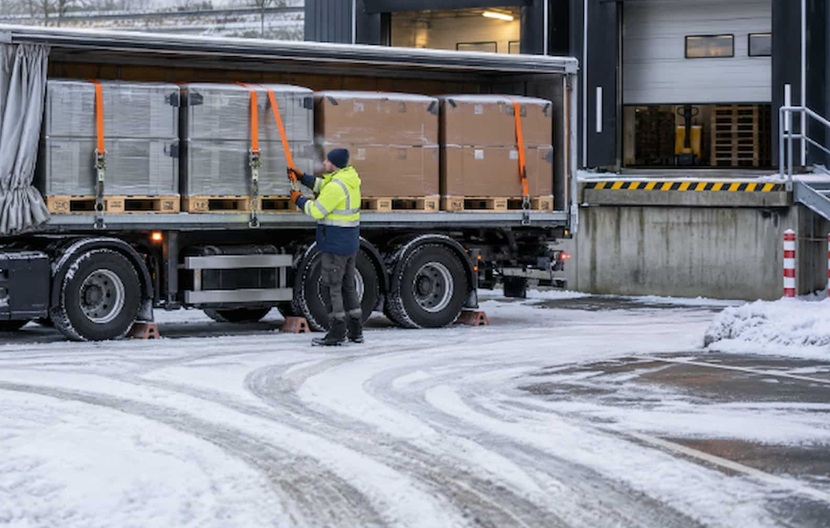
It all starts with the equipment that’s handled on a daily basis. Think of the lashing straps for lorries that hang in the load compartment or lie in a box under the trailer for months on end. There, during winter, they’re exposed to rain, frost and salt spray from the road. A quick check before the real frost sets in prevents a driver from only realising whilst on the road that something is no longer working properly.
Why securing loads feels different in winter
The rules for load securing do not change with the seasons. The conditions, however, do. A driver with cold hands, a load bed with a layer of meltwater and a ratchet that’s stiff: taken separately, these may seem like minor details, but together they make it harder to secure a load properly in one go.
What’s more, the winter months are often busy. The festive season brings higher volumes and tighter schedules. It is precisely at such times that it is tempting to skip a step when securing loads. If you have your equipment sorted in advance, you won’t have to worry about it whilst on the road.
Stuck ratchets and rusty hooks
A ratchet consists of moving parts, and if water gets between those parts, the mechanism can seize up in freezing conditions. A ratchet that does not run smoothly or does not close fully will not provide a reliable tension. Forcing it open with a tool is not a solution, as this will damage the mechanism.
Road salt complicates matters further. The salt on the road also ends up on hooks, fittings and ratchets via splashing water. Steel that remains wet and salty for a long time rusts more quickly. Rinse equipment that has been heavily exposed to brine with clean water and leave it to dry before storing it.
Anyone who drives frequently in wet or salty conditions – for example, with open trailers or in port areas – might want to consider models with stainless steel ratchets and hooks. This isn’t necessary for every fleet, but it does make a difference in terms of maintenance.
Do not store wet straps rolled up
Polyester webbing absorbs very little water, but a wet strap that’s been rolled up hardly dries at all. In a sealed box or side compartment, the moisture then lingers for days. Dirt and salt remain trapped in the fabric and the strap starts to smell musty. In frosty conditions, a wet strap can also freeze stiff, making it difficult to unroll and preventing it from lying flat over the load.
Where possible, allow straps to dry naturally in a dry room. Do not wash them with detergent in the washing machine, as this will damage the fabric and the colour. Lukewarm water and a soft brush are sufficient to remove dirt and salt.
When cleaning, also check the label. A lashing strap that complies with the EN 12195-2 standard will, amongst other things, display the LC value: the maximum force to which the strap may be subjected when securing a load. If that label is no longer legible due to wear and tear or dirt, the strap should no longer be used on the vehicle.
Slippery floor, less grip
A dry loading floor, together with the lashing straps, does part of the work. The friction between the load and the floor helps to keep the load in place. In winter, snow, meltwater and sometimes ice are brought inside via forklift trucks, pallets and shoes. This reduces that friction.
As a result, the same load requires more securing on a wet floor than on a dry one. Wipe the loading floor dry before loading and place anti-slip mats under pallets or loose goods. These provide more grip, meaning the straps have less work to do.
Cold hands, reduced sensation
Working with ratchets and hooks requires a firm grip. With cold hands, it’s harder to feel whether a hook is properly secured in the lashing eye and how much force you’re applying. Work gloves with a good grip are therefore no luxury in winter.
The type of ratchet also plays a part. As well as ratchets that you tighten with a pushing motion, there are models with a longer lever that you tighten by pulling. These put less strain on your wrist and hand, something that drivers who spend all day loading and unloading – particularly on cold days – really notice.
You can read more about working safely in transport and warehouses in the Safety section on LogiNext.
Check again after the first few kilometres
Temperature differences affect the load. Goods transferred from a heated warehouse into a cold trailer may still shrink or settle slightly during the first few kilometres. A strap that was tight at the start will then be less taut.
You should therefore plan a stop after a short distance to check the tension. Check that the straps are still running straight across the load, that they are not rubbing against any sharp edges, and that the ratchets are locked. On longer journeys, repeat this check during scheduled breaks.
A quick check before the real frost sets in
Preparing your load securing for winter doesn’t have to be a major project. Lay out all the equipment from a lorry in a row and check it over. Do the ratchets turn smoothly, are the hooks and fittings free from rust and deformation, are the straps intact and the labels legible? Anything that raises doubts should be removed.
Then make arrangements for drying, cleaning and storage, so that the equipment is still in the same condition come February. That way, securing your load in winter remains what it should be: an integral part of the journey, rather than a hassle on a cold morning at the loading bay.