 Unsplash
For business owners in Twente, Germany is just around the corner. A job just across the border, a trade fair in the Ruhr region or collecting materials from a German supplier – for many companies, this is simply part of their weekly routine. Often, a trailer is taken along. And anyone who has business premises at home with goods vehicles, forklift trucks and visitors knows the other side of the same issue. How do you ensure that everyone knows how fast they’re allowed to go and where they should drive?
Crossing the border with the trailer
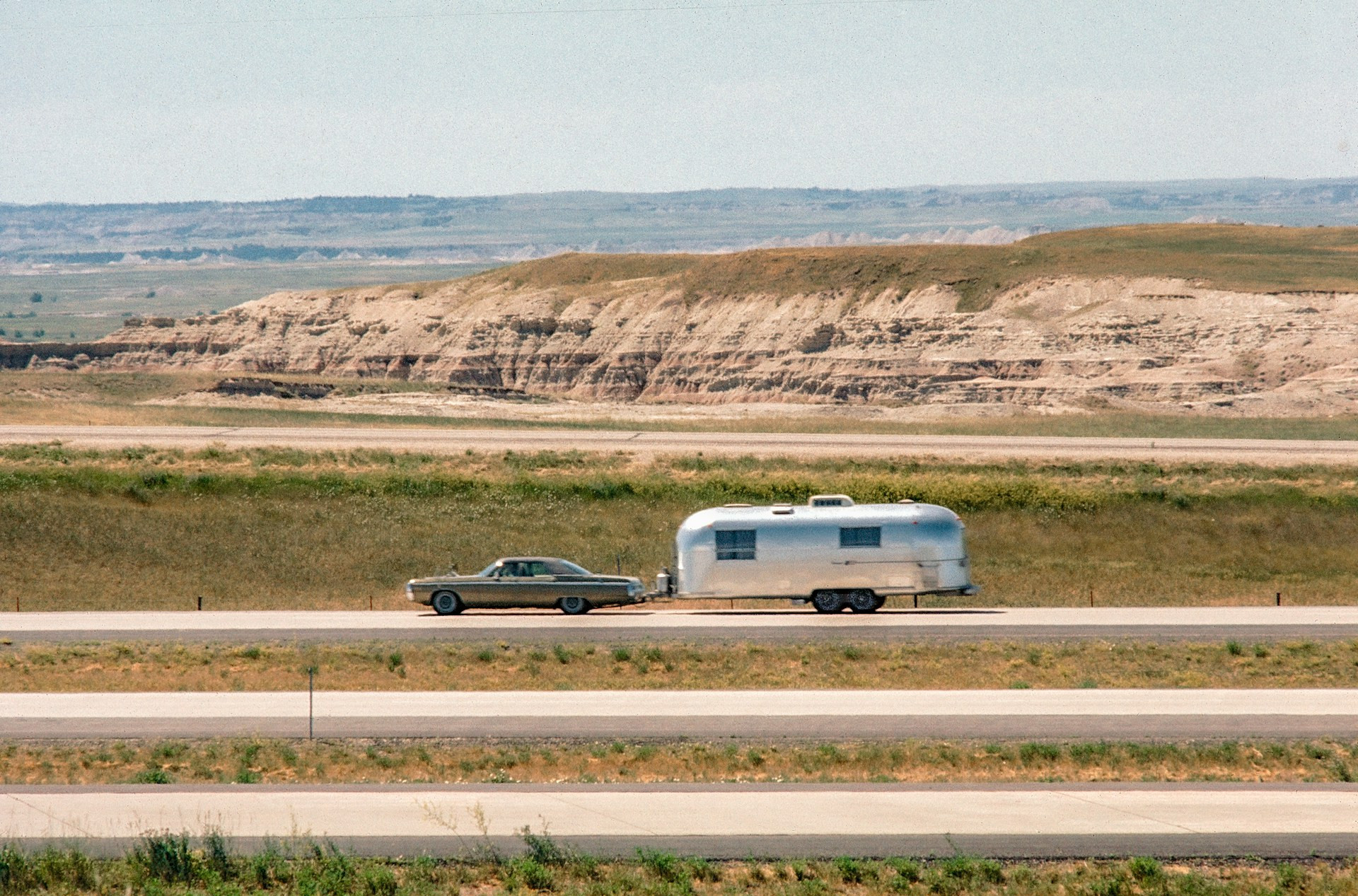
In Germany, a maximum speed limit of 80 kilometres per hour generally applies to a car towing a trailer or caravan on the motorway. Anyone wishing to drive faster can apply for a so-called ‘Tempo 100’ exemption. This allows the vehicle and trailer combination to travel at 100 kilometres per hour on the German motorway. That saves a considerable amount of travel time on a long journey to southern Germany.
You don’t get that exemption just like that. The combination is inspected, which in the Netherlands can be done through organisations such as DEKRA and TÜV NORD, amongst others. The inspection checks requirements for the towing vehicle, such as ABS and a weight limit, and for the trailer or caravan, such as the brakes and tyres. For example, the tyres must not be more than six years old and must have a sufficiently high speed rating. Once approved, a sticker must be affixed to the rear of the trailer or caravan.
A ‘Tempo 100’ sticker is therefore a visible signal to other road users and the German police, but the right to drive at 100 stems from the vehicle inspection and not from the sticker itself. It is also important to note that the exemption only applies in Germany. If you’re travelling through the Netherlands or another country, the local speed limits for vehicle combinations with a trailer will apply there as normal. Check the current conditions with a vehicle inspection body or the ANWB before setting off, as rules are subject to change.
Speed on your own premises
Closer to home, speed also plays a role, namely on your own premises. Lorries arriving to unload, service vans, forklift trucks shuttling between the warehouse and outdoor storage, and visitors looking for the entrance often share the same space. On premises that are not open to public traffic, you as a business owner determine the speed limits and routes yourself. This is an opportunity, but also a responsibility. Traffic on the premises is therefore a logical part of the risk inventory and evaluation (RI&E) that employers with staff are required to carry out.
Agreeing on a speed limit is one thing; ensuring everyone is aware of it is quite another. An external driver may not be familiar with the house rules. It helps to display the rules clearly at the entrance to the site and to repeat them in busy areas, such as the loading bays or the passageway to the warehouse.
Signs or stickers?
Not every location is suitable for a sign on a post. In a warehouse, on a door, on a barrier or on an existing post, a sticker is often more practical. The advantage of traffic sign stickers is that they use the same symbols as the signs along public roads, which every driver is familiar with. A red-and-white circular symbol indicating a speed limit, a no-entry sign or a warning of a dangerous junction needs no explanation. What’s more, stickers are cheaper than signs, making it easier to place them in multiple locations.
Be mindful of where you place them. A sticker at eye level for a lorry driver has a different effect than one at eye level for a forklift driver or pedestrian. Also ensure that outdoor stickers are weather-resistant and replace them if they have faded or become damaged. A symbol that is only half legible does more harm than good, as it gives the impression that the rule is not taken seriously.
Clarity also makes good business sense
An accident on your own premises or a fine whilst on the road costs money, time and, sometimes, a customer. Clear agreements on speed limits, made visible with the right signs and stickers and backed up by the correct documentation for those crossing the border, prevent a lot of hassle. These are small investments that are particularly noticeable when they are missing.