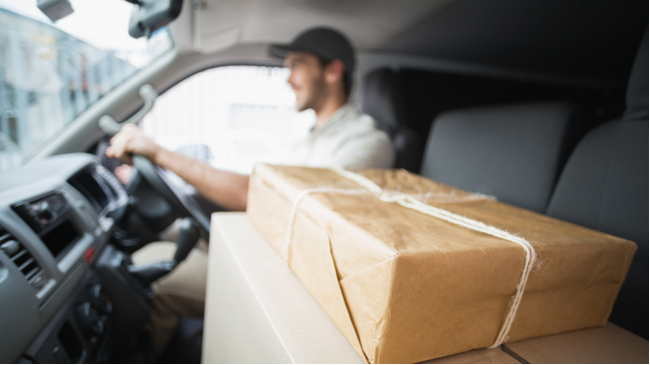
The doomsday scenario of thousands of e-commerce vans polluting inner cities is not true. Research commissioned by the Top Sector Logistics shows that the e-commerce industry pollutes the environment less than expected.
As a matter of course, the growing number of webshop purchases is causing an increase in the number of delivery vans on the road. This is only 2 to 3 per cent of the total number of vans in the Netherlands. Some 35 to 50 per cent of vans are used for commercial transport of goods and parts (goods logistics), possibly in combination with services. As e-commerce delivery vans are more likely to drive in residential areas, they are relatively more conspicuous.
The research further shows that the largest e-commerce carriers use new delivery vans, which are less polluting. The biggest polluters are 15- to 20-year-old vans, which sometimes drive more than 15,000 kilometres a year. In the Netherlands, delivery vans are responsible for 14 per cent of the CO2 emissions of the total Dutch fleet. The remaining emissions are caused by truck traffic and passenger cars.
Earlier this month, in a report on mobility, ABN Amro still stated that the government should combat urban congestion. Inner cities are said to be weighed down by vans, passenger cars and trucks. The bank calls on the government to play a leading role in solving the problems surrounding urban distribution. According to ABN Aro, there are plenty of solutions that the government could help with. "Making construction hubs mandatory in major new construction projects in the city, for example. Encouraging initiatives to use delivery vans more efficiently and have fewer empty runs could also be important." Finally, ABN AMRO mentions electric transport for the last mile of parcels.
Editorial LogistiekProfs











