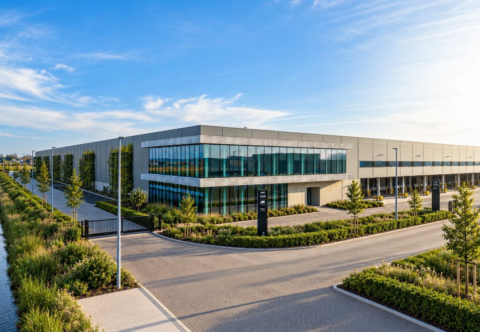
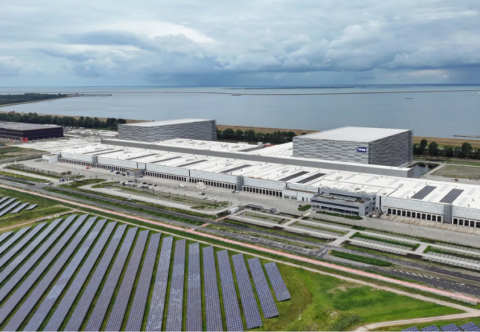
The Dutch landscape is being 'numbed' by the meteoric rise of business parks, filled with XXL distribution centres. So says landscape architect Adriaan Geuze in de Volkskrant. "Municipalities are completely blind, bewitched, bewitched by having new business parks."
The logistics property market broke all records in 2017, with never before so much logistics space being put into use: three million square metres. XXL distribution centres with a minimum size of 40 thousand square metres are particularly in demand.
Need for planning
This rise of these 'big grey boxes' has a downside, argues landscape architect Geuze in de Volkskrant. He argues that there is a need for planning to maintain the accessibility of the Netherlands. "For Europe, the Netherlands is the distribution country par excellence. 80 per cent of what enters the port or Schiphol here goes on. We work hard, we organise it smartly and give companies that settle here a tax advantage. But you cannot indefinitely fill your polders with boxes without adapting highways. Municipalities are utterly blind, bewitched, bewitched by having new business parks."
According to Geuze, logistics hotspots like Tilburg, Eindhoven and South Holland are now almost inaccessible. It is up to the central government to consider whether these are really the best locations for new construction. And, should distribution centres really be built on the best agricultural land? "The central government must take the lead and not let things run their course. That is the fate of the Netherlands, no choices are made, we'll see. And so the landscape goes to waste."
'We are filling up'
René Buck of Buck Consultants International shares Geuze's view. Speaking to the newspaper, he says: "It is such large distribution centres that are now popping up all over the country. This is unprecedented for a country like the Netherlands, and it poses problems for space and the labour market in some regions. We are running out of space."
Shifting logistics hotspots
Remco Buurman of Nederland Distributieland acknowledges tightness, but thinks the Netherlands still has room for growth. Buurman notes a shift away from distribution centres, towards so-called secondary hotspots. "I now see clusters of mega distribution centres emerging in other places in the country, such as Twente and the Arnhem and Nijmegen region. That will be the challenge in the coming years, how to use space efficiently."