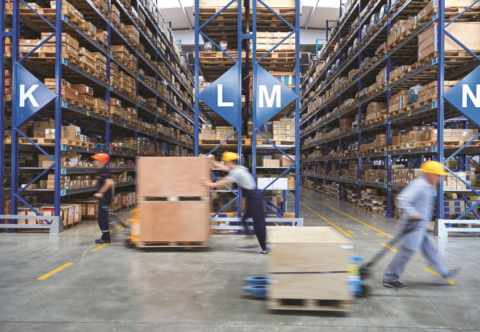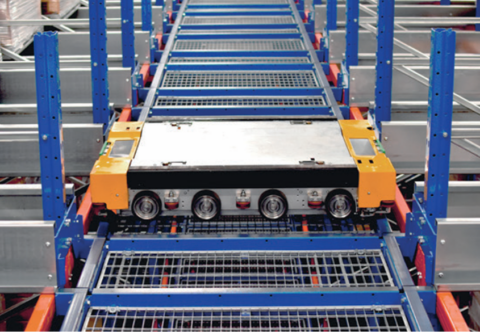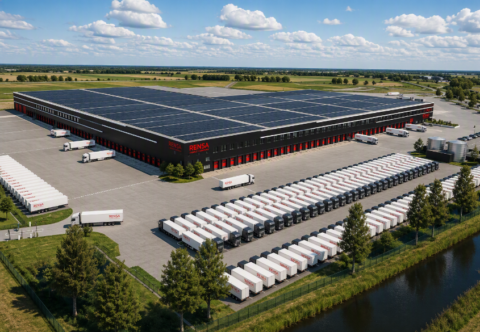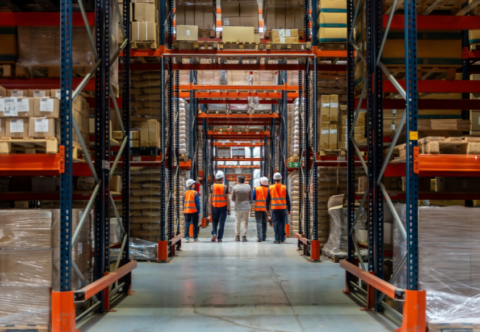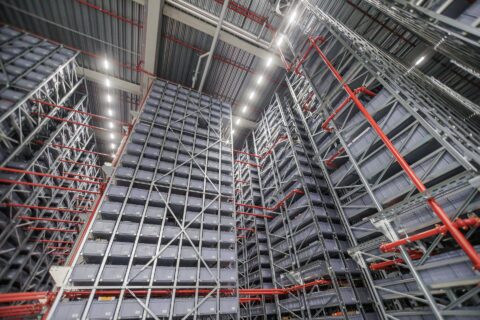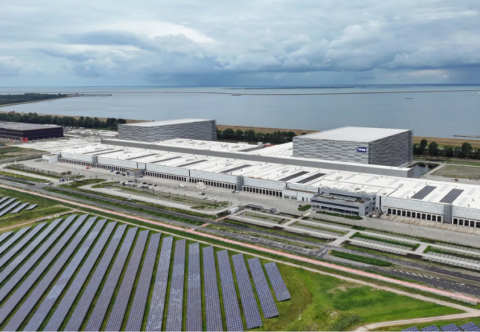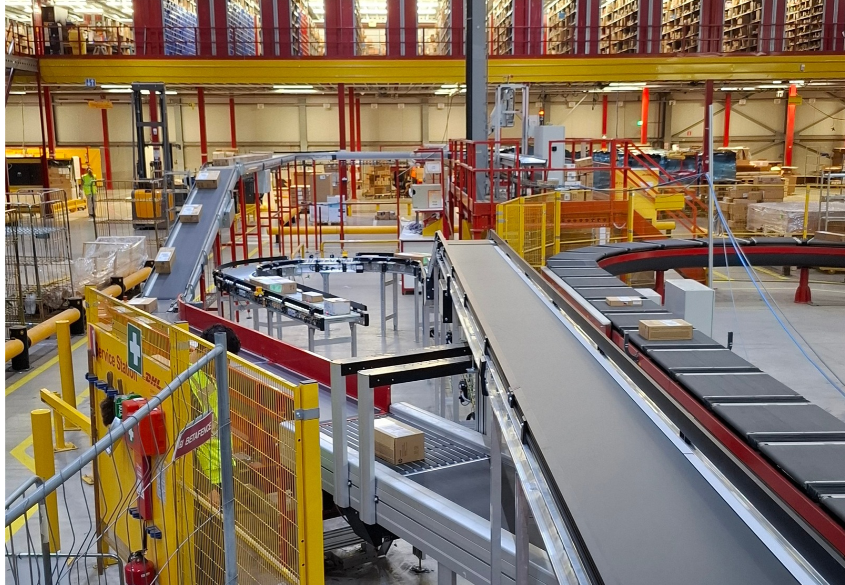
DHL has commenced the retrofit of the intralogistics system at its distribution centre in Beringe, where the logistics service provider manages operations for an international technology client. The existing, fifteen-year-old system is being largely upgraded and expanded in certain areas. The project is being carried out by Inther, which installed the system itself fifteen years ago. The main challenge is ensuring that operations continue uninterrupted throughout the entire transition.
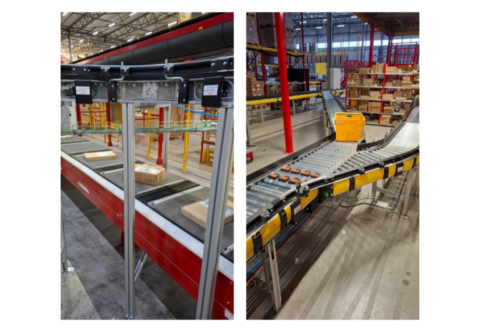
The project includes, amongst other things, the replacement of the existing conveyors, the expansion of sorting capabilities and the addition of an extra level of shelving above the mezzanine. The conveyors leading to the packing tables will also be replaced, and an automatic packaging machine will be added.
In addition, the system’s control system and software are being updated. Although a large part of the existing installation is being replaced, the core of the system will remain in place. This makes the project a retrofit and upgrade of an existing intralogistics system.
Step by step
A retrofit in an operational logistics environment requires a different approach to that needed for the implementation of a completely new system. After all, the existing system cannot simply be taken offline for any length of time. The work is therefore being carried out in phases.
“The biggest challenge lies not so much in the technology itself, but in the fact that everything has to be done whilst operations are ongoing,” explains Marc Biermann, head of sales engineering at Inther. “We therefore worked together to develop an approach whereby we can replace the system step by step. This involves dismantling part of the installation at scheduled times and installing the new section. That section can then be put back into operation as early as the following week.”
This phased approach allows the work to take place whilst logistics operations continue. The first parts of the upgraded system are now live. The entire project is expected to be completed in the first quarter of 2027.
Collaboration
“With a retrofit like this, it’s all about thorough preparation and close cooperation,” says Bas Maas, project manager at Inther. According to Maas, this cooperation is a key factor in the smooth running of the project, where various tasks must be constantly coordinated with one another.
“We work well together, to the satisfaction of both parties. DHL actively contributes ideas and is very flexible, for example when the process needs to be temporarily halted. During the week, we prepare as much as possible so that we can carry out targeted reconfiguration during the scheduled slots at the weekends. However, if necessary, we are also allocated a specific time slot during the week to carry out the work, after which operations resume.”
Trust
The retrofit builds on a partnership that began fifteen years ago. The original system was due for an upgrade, partly because various components and software modules had reached the end of their technical lifespan. At the same time, the logistics partnership between DHL and its client was extended and expanded, creating a need to adapt the installation to future operations and the additional volume.
“It is valuable that, after around fifteen years, we are once again involved in the modernisation of the system,” said Biermann. “We are familiar with the installation, the processes and the interfaces. Particularly with a retrofit that has to be carried out step by step within an existing operation, that knowledge helps to keep the transition manageable.”
With this retrofit, DHL will soon have a modernised and expanded intralogistics system, whilst the impact on day-to-day operations remains limited throughout the project.