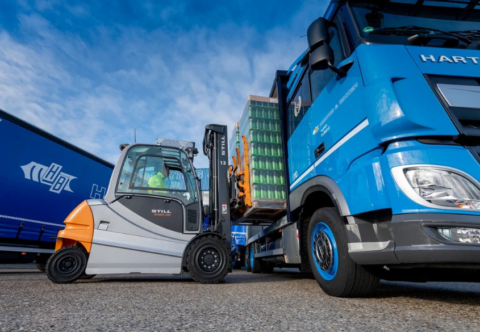
Logistics service provider DACHSER plans to replace all transport equipment in its European warehouses with vehicles powered by energy-efficient lithium-ion batteries by 2022.
Around 6,000 vehicles are involved. The lithium-ion batteries DACHSER plans to switch to last three times longer than conventional lead-acid batteries. The charging time is also significantly shorter. According to the logistics provider, this increases the flexibility of vehicle use. In addition, no special space is needed for charging the batteries. The resulting space freed up in transhipment terminals can be used for loading and unloading goods.
"If you take into account the savings in avoided maintenance and damage costs because the batteries no longer need to be taken out of the vehicle daily to recharge, a lithium-ion fleet has already paid for itself today," explains André Bilz, Team Leader Fleet Management Terminal Equipment at DACHSER.
By switching to new batteries, DACHSER also hopes to reduce its environmental impact. Conventional batteries contain lead and need to be replaced after about 1,200 charging cycles. With the lithium-ion batteries, the logistics provider expects to save 9.6 million kilograms of CO2 annually. COO Michael Schilling: "This modernisation project is an excellent example of how profitability and sustainability can go hand in hand, which in turn ultimately benefits our customers."
By 2022, DACHSER aims to implement the new technology in all Road Logistics locations. The technology, charging infrastructure and energy management software comes from supplier Triathlon. The switch will be gradual: sites will not use both technologies at the same time. Lithium-ion technology has already been introduced in several German DACHSER sites.