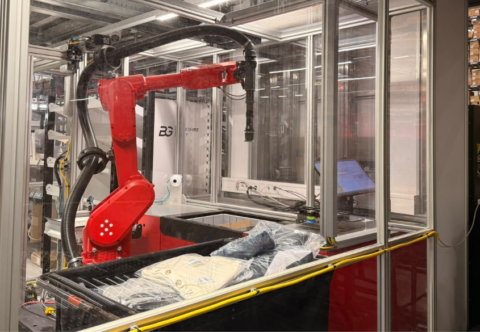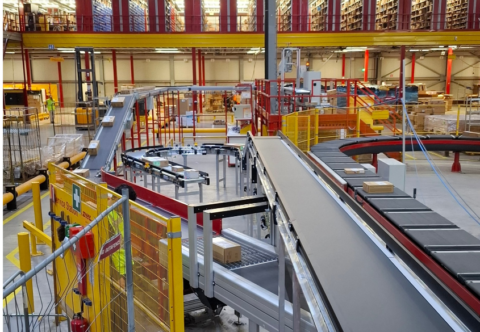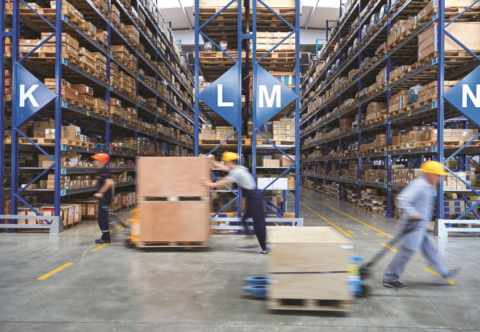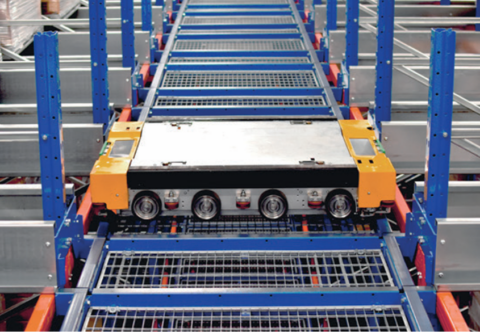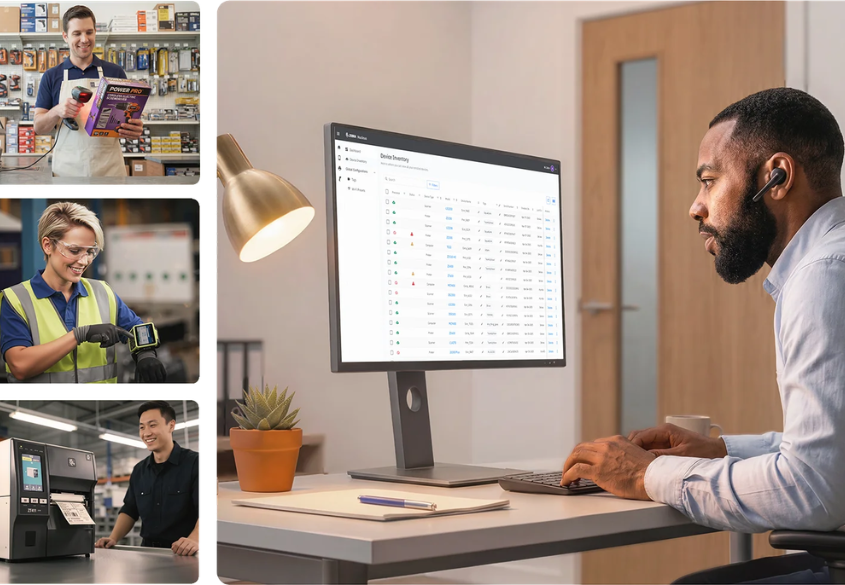
The logistics sector is on the cusp of a new phase. Small language models, visual AI and smart mobile devices are supporting warehouse staff with stock management, goods receipt and quality checks. That is the belief of Zebra Technologies, a company that once made its name with barcode printers and scanners. And the barcode? It certainly isn’t going away – quite the opposite.
Text: RIK SANDERS Image : ZEBRA TECHNOLOGIES
‘AIis everywhere these days,’ says Tom Bianculli, chief technology officer (CTO) at Zebra Technologies, an American supplier of scanning, track-and-trace and mobile computing solutions for the workplace in logistics, retail, manufacturing, transport and healthcare. The Lincolnshire (Illinois)-based company supplies, amongst other things, barcode scanners, RFID and printer products, handheld devices, tablets, industrial scanners, machine vision cameras, 3D sensors, interactive kiosks and supporting software, into which AI technology is increasingly being integrated. Nevertheless, he warns against blind enthusiasm. ‘You need to deploy AI with a specific purpose in mind. Many organisations now use AI in their back offices for planning, analysis and reporting. But as soon as you bring AI onto the shop floor, things get more complicated. Then you need to look at processes, scenarios and the right tools.’
Bianculli states that Zebra has actually been working with AI for years, but with automation and machine vision systems. The recent breakthrough lies in the fact that more and more AI functionality can run directly on devices. ‘In the past, everything had to go to the cloud. But if every employee is constantly using AI, costs mount up quickly. That’s why we’re bringing AI to the device itself. To do this, we use small language models and specialised GPU and MPU processors from Qualcomm. This enables staff to use AI directly on the shop floor.’
The CTO mentions a British client who had developed several GPT-style applications for processes such as packaging and quality inspections. The problem was that staff constantly had to walk over to a PC to use them. ‘First you walk to a terminal, ask your question, get an answer, and then walk back again. That doesn’t work in a warehouse. AI needs to be available right where the work is being done.’
Visual AI replaces manual scanning
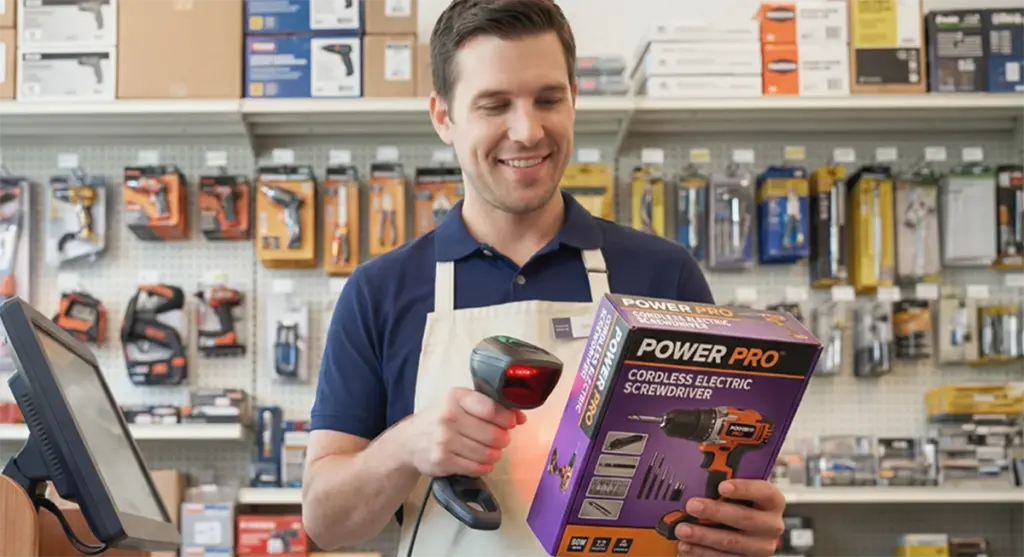
Whilst large language models such as ChatGPT are primarily text-based, Zebra expects the greatest AI gains in logistics processes to come from images. According to Stephan Pottel, Manufacturing Manager EMEA at Zebra Technologies, warehouse staff do not have time to type out detailed prompts. ‘An employee simply wants to take a photo of a pallet, a shelf or the back of a lorry. The technology then needs to understand what’s in the image.’
That’s where, according to him, visual AI comes into play. Computer vision models automatically count boxes on a pallet, read freight documents and compare the goods found with the consignment that should have been delivered.
‘Suppose the loading list shows eight boxes, but there are only seven on the pallet. The system automatically flags that something is missing. That data can be processed immediately in a back-office system such as SAP. Only exceptions still require human attention.’ He predicts that the traditional tasks of checking, counting and data entry will thus largely disappear from the logistics process.
Small language models on the device
In this context, Pottel refers to Zebra’s ‘frontline AI’ strategy, which utilises machine vision and small language models. The machine vision solutions extract information from the physical world using, for example, photos and videos. These insights then provide context for a language model, whether small or large. The small model runs locally on the device and helps to streamline processes.
He gives the example of a parcel delivery driver taking a delivery photo. ‘In a photo like that, you can read the barcode, see where the parcel is and determine how many parcels are visible. But every company also has its own rules. Perhaps no people, pets or address details are allowed to be visible. The language model understands these standard procedures and then determines whether the photo complies. You see, vision models have been around for years. The difference now is that generative AI has made them much more accessible.’
AI for stock management and goods receipt
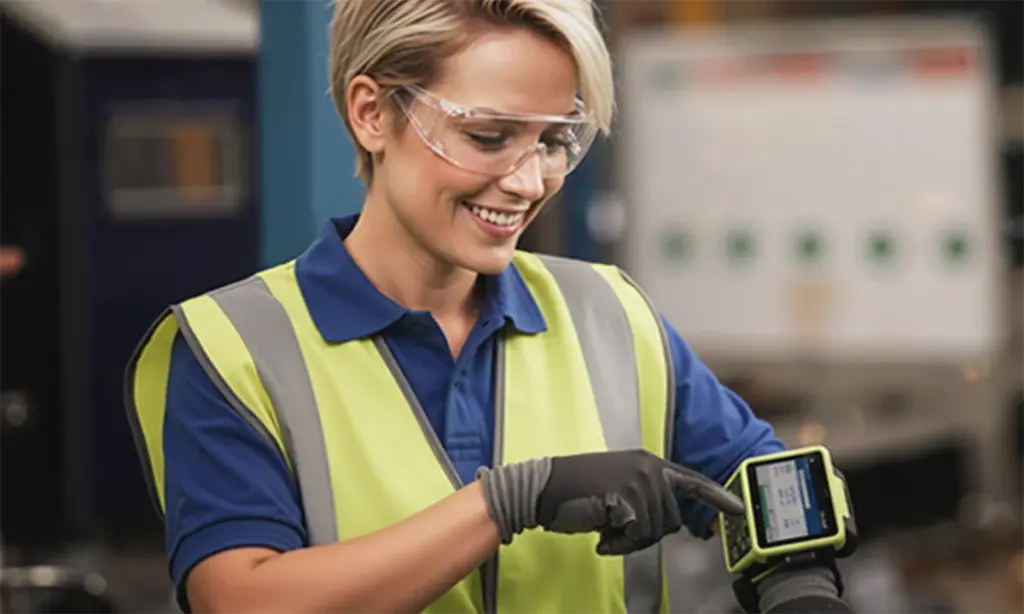
Zebra expects AI to have the greatest impact on logistics processes relating to warehouses, stock management and goods receipt. Bianculli points to distribution centres where staff still manually enter data from paper documents. He knows of a German insulin manufacturer that receives raw materials from an external service provider. The delivery documents contain important batch details, but no barcode. ‘An employee literally had to type that information from the paper into SAP. That’s prone to errors. With our models, you simply take a photo of the document and the information is automatically extracted and entered.’
In his view, AI does not need to be perfect. ‘Many people talk as if AI has to be 100 per cent error-free. I don’t believe that. If a system automates 95 per cent of the work and only forwards borderline cases to a member of staff, that in itself saves a huge amount of time.’
He believes that the final stages of logistics processes also offer opportunities. ‘As soon as goods leave the warehouse or are delivered, manual checks are often still required. These models can take over a lot of that work. You’re now seeing logistics service providers investing in connectivity and smarter mobility to capitalise on these kinds of developments. AI acts as a catalyst for these developments.’
From barcodes to multimodal data
Zebra started out as a supplier of barcode printers. Its portfolio has since expanded considerably. Although the end of the barcode seemed to be in sight – the barcode standards organisation GS1 had previously cited 2027 as the year the QR code would replace the barcode – CTO Bianculli does not expect this to happen any time soon. ‘The barcode is simple, cheap and established worldwide. Everyone understands how it works. There have been experiments with operating entirely without barcodes, but I haven’t yet seen that being widely adopted.’ He does, however, see new applications emerging where barcodes are combined, for example, with additional authentication techniques to combat counterfeiting, such as in the pharmaceutical industry. Ultimately, the future of logistics AI lies in combining all available sources of information, including barcodes, says Zebra’s CTO.